Universities and programs
How to Choose the Right University
A practical way to evaluate universities against your goals, rather than a list of famous names.
8 min read
Read guide
University in Canada
A public university with three campuses in the Greater Toronto Area. St. George sits downtown; Mississauga and Scarborough offer distinct campus settings within the same institution.

Toronto · Canada · Public
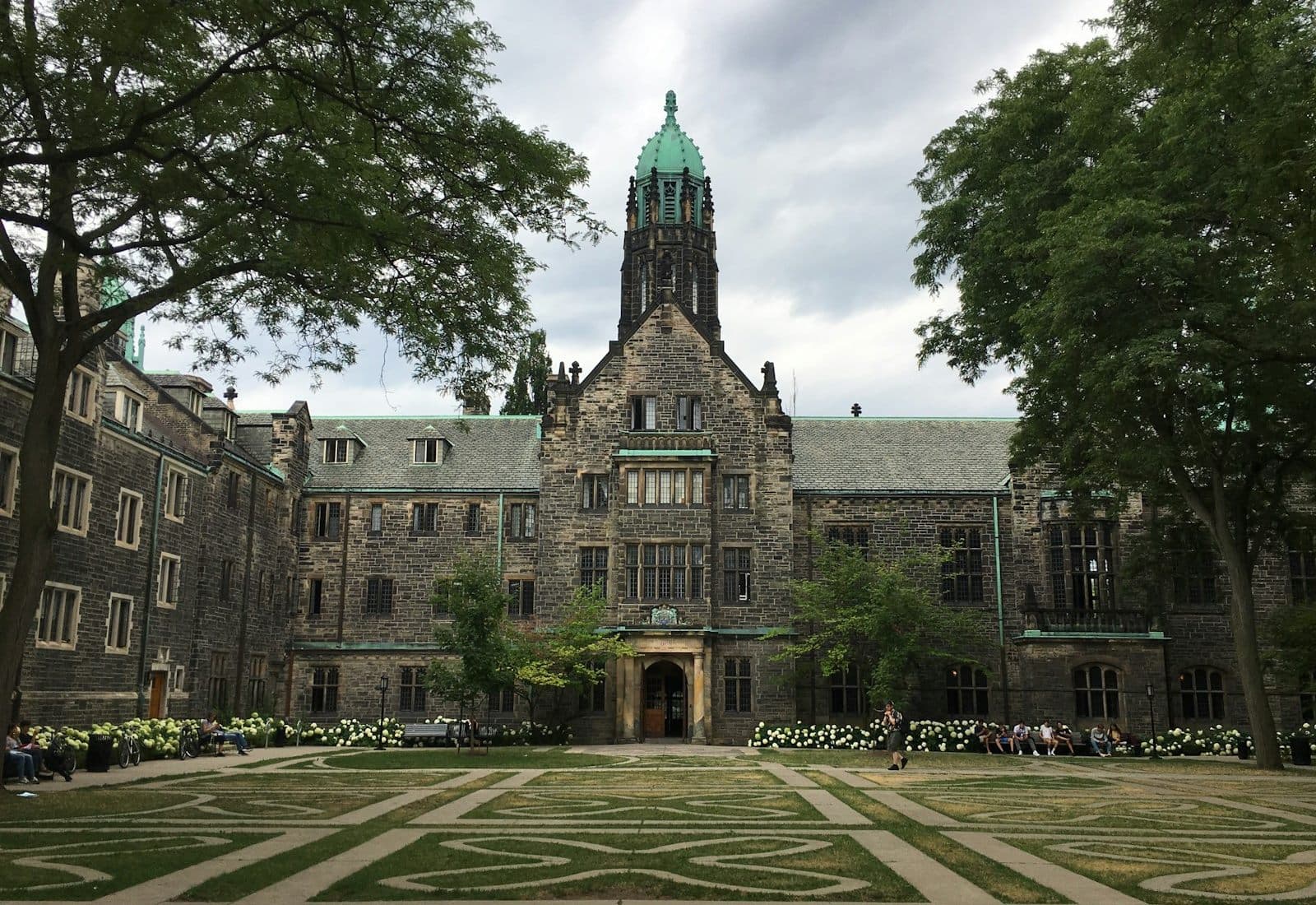
A short orientation — not a ranking, and not a substitute for the course pages you will eventually read.
The University of Toronto is a public research university whose size is part of the experience. Three campuses share the institution’s name and many academic policies, but they do not feel identical on a Tuesday afternoon.
St. George is a dense downtown campus. Mississauga and Scarborough are fuller campus environments with their own student mix. Where you apply — and later, where you live — should be a conscious choice, not an afterthought.
We currently connect Toronto to computing, business and engineering in our university listing, and we feature a Master of Public Health. Those are leads into a much larger course catalogue.
Toronto can be a strong university to evaluate if you want a large public institution in a major Canadian city — and if you are ready to choose a campus and a faculty, not only a famous city name.
Programmes are not all interchangeable across St. George, Mississauga and Scarborough. Confirm where your course is taught before you picture downtown Toronto as the whole of student life.
Computing, business and engineering appear in our listing; public health appears as a featured master’s. The university teaches far more than that. Use our chips as a way in, then read the faculty that actually owns your subject.
You are unlikely to be the only international student in your class. That can ease the practical start. It does not remove the need to check visa rules, health insurance and housing timelines.
The Lester B. Pearson International Scholarship is listed here. It requires school nomination and is highly selective. It is worth understanding if you are an undergraduate applicant — not something to budget as if it were likely.
A curated preview from what we currently list for University of Toronto — not every course the university teaches, and not a ranking of faculties.
Study levels listed here: Master's
Master's · Health & Medicine
Student life follows the campus you join. Downtown St. George is urban and busy. Mississauga and Scarborough feel more like campuses with their own rhythm, still inside a large metropolitan region.
Commuting, housing and the mix of students differ by campus. Read residence and commuting notes for the campus that teaches your programme, not a generic “Toronto student” story.
Work, internships and cultural life are close at hand, especially at St. George. Cost and pace are part of that bargain. The destination page covers Canada more broadly.
Supports for international students exist at university level. What you actually use — advising, clubs, housing — still depends on how you organise the year.
Toronto is Canada’s largest city. For study permits, typical costs of living in Canada, and how the Canadian academic year is structured, use the Canada destination page. This page stays with the university.
International tuition at Toronto is set by faculty and programme, and it changes. A commerce undergraduate fee is not a public health master’s fee, and neither is a living-cost figure.
The university publishes fees for domestic and international students by faculty. Always match the table to your programme and entry year.
Residence, food and transport in the Greater Toronto Area sit on top of tuition. Campus location will change the mix. We do not display unofficial averages.
If you need help comparing fee tables with another Canadian option, a guidance conversation is more reliable than a round number on a profile page.
The Lester B. Pearson International Scholarship is a university undergraduate award that requires nomination. Other Canadian schemes, including some at federal level, may be relevant depending on study level. Funding is never assumed.
University of Toronto · Tuition coverage
Admission is by programme and campus. High school pathways, transfer routes and graduate applications each have their own file.
Undergraduate admission typically looks at your secondary curriculum and required subjects. Graduate programmes ask for a prior degree and, often, references and a statement. Prerequisites are not optional extras.
If you have not studied in English in a way the university recognises, you will need an accepted test or equivalent. Required scores are published by the university and can differ by faculty.
Some courses add interviews, portfolios or supplementary applications. Public health, engineering and commerce will not share one checklist.
Confirm requirements on the official programme page for your year of entry.
Short answers for orientation. Official university pages remain the source of truth for your year of entry.
In the Greater Toronto Area, Canada, across three campuses: St. George in downtown Toronto, Mississauga and Scarborough. Your programme determines which campus you attend.
Toronto teaches a very wide range of subjects. We currently highlight computing, business and engineering, and feature a Master of Public Health. Use the university’s course search for the complete, current list.
They depend on the programme, campus and your previous education. English language evidence is commonly required. There is no single Toronto offer standard that covers every faculty.
The Lester B. Pearson International Scholarship is one undergraduate route, by school nomination. Other awards exist. None should be treated as guaranteed funding.
Most undergraduate applications use the Ontario universities’ application service, with extra steps for some programmes. Graduate applications usually go to the School of Graduate Studies. Application Support can help you sequence the work.
Yes. International students study on all three campuses. Study permit rules and fee status still apply and should be checked for your own situation.
Practical reading while you decide whether Toronto — and this destination — may fit.
Universities and programs
A practical way to evaluate universities against your goals, rather than a list of famous names.
8 min read
Read guide
Scholarships and funding
Tuition is only part of the picture. Use this guide to think through living costs, funding and planning.
6 min read
Read guide
Applications
Documents, tests, timelines and the practical things to gather before you apply.
5 min read
Read guideOther institutions we currently list in the same destination or overlapping study areas — a comparison set, not a ranking.
Fit depends on the programme, your background, budget and where you want to live — not on a famous name alone. A conversation can help you see whether this university, or another, may be the right next step.