Universities and programs
How to Choose the Right University
A practical way to evaluate universities against your goals, rather than a list of famous names.
8 min read
Read guide
University in the United States
A private institute in Cambridge, Massachusetts, focused on science, engineering and related fields. It is a specialised institution — not a typical large state university — which is useful context when you compare it with other US options.

Cambridge · United States · Private
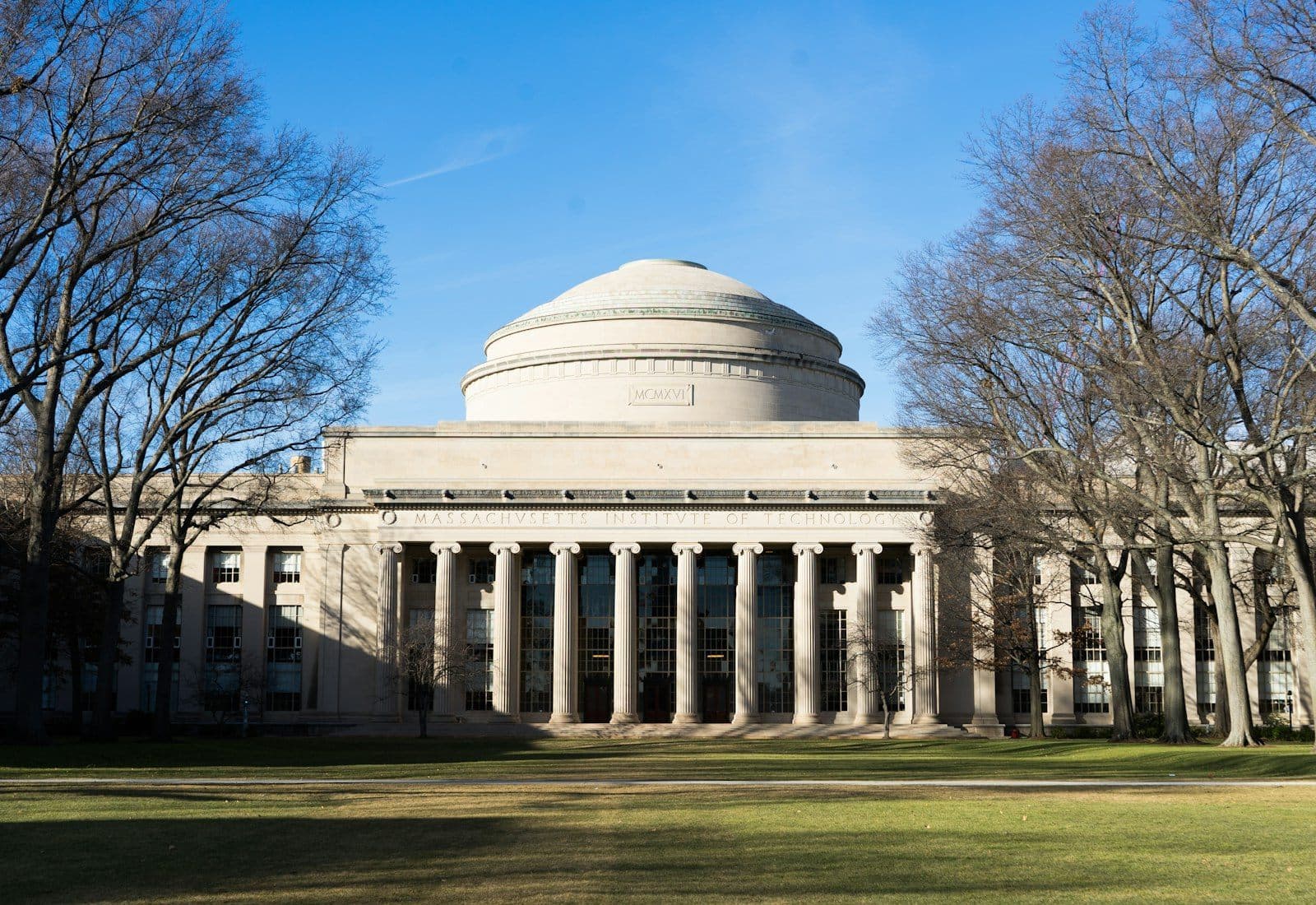
A short orientation — not a ranking, and not a substitute for the course pages you will eventually read.
MIT is a private institute. Undergraduate education is organised around science and engineering, with computing as a central part of that landscape. It is not a comprehensive liberal-arts college, and it is not a public flagship with in-state tuition logic.
The campus sits in Cambridge, across the river from Boston. Daily life is urban and dense: labs, classrooms and student housing on a compact site, with the wider Boston area available but not automatic.
We currently list computing and engineering as study areas, and we feature an undergraduate Computer Science programme. That matches how MIT is often approached by international students — it is still not a complete map of every department.
MIT is a serious option to evaluate if you want an intensive science and engineering environment in the US, and if you are prepared for a highly selective, high-workload undergraduate culture. It is not a default “best university” label.
Computing and engineering dominate how we currently present MIT. If your primary interest is a broad humanities degree, this is probably the wrong comparison set. If you want a technically demanding first degree, it belongs on a shortlist to research properly.
Admission is holistic and competitive. There is no single test score or GPA that “gets you in,” and we will not invent one. Read MIT’s own admissions pages for the current process.
MIT’s listed undergraduate aid is typically based on demonstrated financial need, including for many international students — subject to current institute policy. That is a policy to verify, not a promise of a particular package.
You study in a compact academic city next to Boston. Internships and research opportunities in the region are often discussed; they still depend on visa rules, your course load and what you actually apply for.
A curated preview from what we currently list for Massachusetts Institute of Technology — not every course the university teaches, and not a ranking of faculties.
Study levels listed here: Undergraduate
Undergraduate · Computing & Technology
Explore all programs at Massachusetts Institute of Technology
Undergraduate life at MIT is often described by students as academically heavy. Housing, living groups and independent activities exist; they sit alongside a workload that is part of the culture rather than an optional extra.
Most undergraduate teaching happens on the Cambridge campus. You will not have a long inter-campus commute. You will have a full timetable.
Dorms, independent living groups and student activities are part of how community forms. They do not reduce the academic load. Visit MIT’s student life pages rather than assuming a US “campus movie” version of the week.
MIT enrols international undergraduates and graduate students. Visa categories, CPT/OPT rules and health insurance are US-specific and must be checked for your level of study.
Cambridge, Massachusetts, sits next to Boston. For US student visas, the difference between public and private universities, and destination-level cost context, use the United States page. This page stays with MIT.
MIT publishes undergraduate tuition and a student budget. Those figures change by year and are not the same as graduate tuition, which is often arranged by department. We do not reprint unofficial numbers here.
As a private institute, MIT does not have in-state tuition. The published undergraduate cost of attendance is the starting point — then aid, if you qualify, may change what you pay.
Many graduate students are funded through research or teaching appointments. That is programme-specific. Do not assume undergraduate aid logic applies to a master’s or PhD.
Always use MIT’s current published costs. A consultation can help you compare this private US option with public universities or other destinations.
Need-based undergraduate aid is the main university funding story in our listing. It is not a merit scholarship in the usual international sense, and current policy should be confirmed with MIT. Graduate support is typically departmental.
Massachusetts Institute of Technology · Need-based aid
Undergraduate and graduate admissions are separate processes with different tests, deadlines and expectations.
MIT uses its own application process. Testing policies, essays and interview availability change. We will not summarise last year’s rules as if they were permanent.
Departments set their own requirements — prior study, references, and sometimes subject tests. Apply to a programme, not to “MIT” as a single graduate door.
Requirements depend on your prior education and the level you are applying to. Confirm the current standard on the relevant MIT admissions page.
Application Support can help you plan a US application file. MIT’s pages remain the authority.
Short answers for orientation. Official university pages remain the source of truth for your year of entry.
In Cambridge, Massachusetts, in the United States, across the river from Boston. Undergraduate life is centred on this campus.
MIT is organised around science, engineering and related fields. We currently highlight computing and engineering, and feature undergraduate Computer Science. Check MIT’s departments for the live list, including graduate programmes.
Undergraduate and graduate requirements are different, and they change. There is no single GPA or test score we can quote as “enough.” Read the current MIT admissions pages for your level of study.
Undergraduate aid is typically need-based, including for many international students, subject to current policy. Graduate funding is usually arranged by department. Neither is guaranteed by this page.
Undergraduates apply through MIT’s published process. Graduate applicants apply to a department. Deadlines are early by international standards. Application Support can help you sequence the work.
Yes. International students study at undergraduate and graduate level. US visa rules and, for undergraduates, aid applications are part of the process.
Practical reading while you decide whether MIT — and this destination — may fit.
Universities and programs
A practical way to evaluate universities against your goals, rather than a list of famous names.
8 min read
Read guide
Scholarships and funding
Tuition is only part of the picture. Use this guide to think through living costs, funding and planning.
6 min read
Read guide
Applications
Documents, tests, timelines and the practical things to gather before you apply.
5 min read
Read guideOther institutions we currently list in the same destination or overlapping study areas — a comparison set, not a ranking.
Fit depends on the programme, your background, budget and where you want to live — not on a famous name alone. A conversation can help you see whether this university, or another, may be the right next step.